
Is your church considering a major building project, debt reduction, or a significant mission expansion? While annual giving sustains the day-to-day ministry, a Capital Campaign is a different approach entirely. It requires a shift in mindset, a specific strategic roadmap, and a deep level of congregational trust.
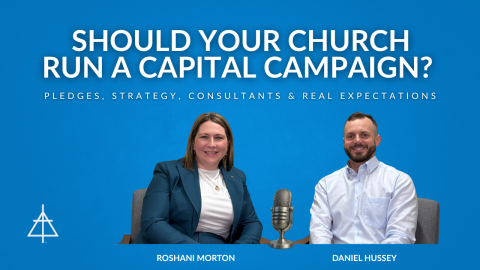
In a recent conversation, Roshani Morton, Director of Advancement for the CRCNA in Canada, sat down with Daniel Hussey of Hussey Philanthropic Consulting to discuss how churches can navigate these high-stakes seasons of growth.
The Mountain Climb: Understanding the Strategic Phases
Hussey often describes a capital campaign as summiting a mountain peak. You don’t just sprint to the summit; you need a map, the right gear, and several "base camps" along the way. Any mistake in the preparation and planning of the journey becomes irreparably damaging at some point during the climb.
For churches new to this process, the journey typically involves six phases:
- Project Vision and Campaign Strategy (3-12 months)
- Community Conversations (3 months)
- Campaign Planning (3 months)
- Quiet Phase (1-3 years)
- Public Phase (3 months)
- Campaign Completion (3-6 months)
Signs of Readiness
One of the most common questions church councils ask is: "How do we know we’re actually ready?" According to Morton and Hussey, readiness isn't just about the balance in the savings account or the need for funding. A campaign is all about vision clarity. Does the congregation understand why this project matters?
A church is ready when the leadership is unified, the vision is clear, and the nervousness around financial risk has been addressed through transparent planning.
The Role of the Consultant: Guide or Passenger?
Many churches wonder if they should do it alone or hire a consultant. The decision often comes down to capacity. A capital campaign is a full-time job on top of the already busy life of church staff and volunteers.
When looking for a consultant, it’s important to understand the different models available, whether it's a retainer-based or project-based fee.
Hussey notes that best practices always prioritize the relationship between the church and the donor; a good consultant shouldn't be the one asking for the money, but rather the one equipping the church's leaders to do so authentically.
Navigating the "Stall-Out"
Every major campaign hits a plateau, a period where the initial excitement fades and the goal still feels far off. These "stall-out" periods are normal. The way to move past them is consistent communication and celebrating the "small wins" along the way to remind the congregation that the mountain is still worth climbing.
Watch the Full Conversation
Resources & Links
Hussey Philanthropic Consulting
Download the Capital Campaign Guide
Questions? Reach out: [email protected]

Let's Discuss
We love your comments! Thank you for helping us uphold the Community Guidelines to make this an encouraging and respectful community for everyone.