
The night before Synod began, tornado sirens sounded.
Severe thunderstorms rolled through the area, and for a time many of us watched the weather and wondered what the morning would bring. Thankfully, little damage was done where we were staying. Yet the experience reminded me of something I have seen many times after a major storm.
When a neighbourhood is hit hard, people emerge from their homes. They check on one another. They clear fallen branches. They help neighbours whose yards suffered more damage than their own. Nobody celebrates the storm, but there is often a surprising sense of purpose afterward. The focus shifts from what happened to what comes next.
That image stayed with me throughout Synod 2026.
For several years, many conversations within the Christian Reformed Church have been shaped by conflict, uncertainty, disaffiliations, leadership transitions, and difficult decisions. Those realities have not disappeared. They remain part of our story. Yet what surprised me most about Synod was that the gathering was not characterized primarily by controversy.
It was characterized by hope.
I arrived expecting to spend most of my time engaged in discussions related to mission and church planting. As a church planter and Local Mission Leader for Resonate, I assumed my experience would naturally lead to a committee assignment connected to ministry development, discipleship, or multiplication.
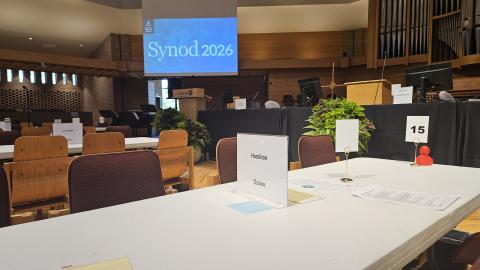
Instead, I was assigned to the Synodical Services Committee, which was responsible for reviewing updates to the Rules for Synodical Procedure, Council of Delegates reports, reports from the synodical deputies, and several overtures.
To be honest, it was not the assignment I would have chosen for myself. Yet I quickly discovered why committee work matters so much. While the plenary sessions receive most of the attention, the committees are where the majority of Synod's work is actually done.
Our chairperson, Rev. Willem Delleman, led the committee with a remarkable combination of patience and clarity. Discussion was encouraged, differing viewpoints were welcomed, and yet the work continued moving forward. Around the table were people with very different gifts. Some brought decades of historical knowledge. Others had an ability to identify the heart of an issue in just a few words. Some consistently asked what assumptions lay beneath a proposal. Others focused on the long-term implications of a recommendation.
As a church planter, I tend to think about vision, innovation, and future possibilities. Yet this committee reminded me that governance is never merely about governance. Decisions about procedures, accountability, and leadership structures ultimately shape the church's ability to pursue its mission faithfully and effectively.
Somewhere along the way I caught myself saying, "I never thought I would get excited about rules and procedures."
The evening plenary sessions reinforced a theme that would emerge repeatedly throughout Synod: a renewed focus on the future of the church.
Dr. Elaine May, Congregational Renewal Consultant with Thrive, presented plans focused on discipleship and leadership development. Her presentation highlighted the importance of cultivating healthy congregations capable of developing mature disciples and emerging leaders.
Dr. Tim Sheridan then introduced Resonate's ten-year church planting vision and walked delegates through the Impact Roadmap 2026.
His presentation was deeply personal.
Tim spoke candidly about wrestling with whether he should continue in his current role. As he described the vision before the Synod, however, his conviction became unmistakable. He concluded by saying that he was prepared to give the next ten years of his life to this work.
He was all in. That moment affected me deeply, and looking around the room, it seemed that this was widely felt.
As someone whose ministry has been shaped by church planting, I felt a renewed sense of calling. The vision is ambitious, perhaps even audacious. Yet at its heart is a simple conviction: disciples make disciples, leaders develop leaders, and healthy churches plant new churches.
The energy in the room was noticeable. Delegates engaged seriously with the vision and the opportunities it presented. The conversation felt larger than a strategic initiative. It felt like an invitation to imagine what God might do through the Christian Reformed Church over the next decade.
That same spirit appeared in Executive Director Zachary King's address. Rather than delivering a purely informational report, he painted a picture of the church in Antioch—a church shaped by Prayer and fasting, Intergenerational Discipleship, Biblical Diversity, and Holistic Mission.
The connection felt especially significant because the Church Planting Initiative has independently adopted the name "The Antioch Movement" for its multiplication strategy. Two different presentations, developed independently, pointed delegates toward the same biblical image: a church that sends, multiplies, and participates in God's mission.
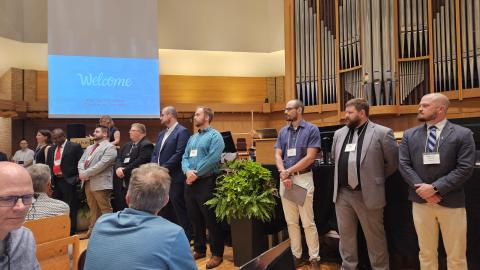
The response was remarkable. Synod rose in a standing ovation. That doesn't happen very often.
Over the course of the gathering, delegates would stand on several occasions, including for Rev. Lora Copley's appointment as editor-in-chief of The Banner and in thanking worship leaders. Longtime attendees told me that such moments are uncommon.
Standing ovations are not parliamentary actions. They are emotional indicators. They reveal what has touched the hearts of those in the room.
Not every conversation was easy.
I wrestled with the decision to leave the World Communion of Reformed Churches, but I could not reconcile continued membership with the organization's support for abortion rights. At the same time, I wondered whether the conclusion of the Dignity Team's work may be arriving too soon.
Yet even those conversations felt different from what I expected. The atmosphere was not one of despair. It was one of discernment.
One of the most encouraging observations came through interactions with the young adult advisors. Again and again, I heard young leaders express a desire for clarity. They wanted the church to know who it is. They wanted confidence in its theological convictions, mission, and identity.
In many circles, younger generations are often portrayed as wanting less doctrinal clarity and fewer confessional commitments. My experience at Synod suggested something quite different. Many of these young adults seemed eager for a church that understands its theological foundations and is prepared to articulate them clearly.
There were other signs of a denomination looking ahead.
Conversations about multisite churches reflected a willingness to explore new ministry models while remaining rooted in historic Reformed convictions. Discussions about discipleship, leadership development, and church multiplication appeared repeatedly in both formal presentations and informal conversations.
Several delegates commented that it felt as though the denomination had turned a corner. I sensed the same thing. The challenges facing the Christian Reformed Church are real. No one should minimize them. There are still branches to clear, repairs to make, and difficult conversations ahead.
Yet what I experienced at Synod felt less like people standing in the middle of a storm and more like neighbours gathering the morning after.
People were helping one another.
People were listening to one another.
People were imagining the future.
For the first time in several years, it seemed that many in our denomination were no longer focused primarily on what we have lost.
Instead, they were beginning to ask a different question:
What is God calling us to build next?


Comments
Dr. Spoelstra, thank you so much for sharing your reflections on Synod! I think for many folks, Synod is a hard-to-understand meeting that can seem detached from our everyday lives and everyday ministry. Thank you for helping me (and others) understand what really goes on at our denomination's annual meeting.
Amen!
The most important thing with a gathering like our Synod is not "what are we going to do?", and certainly not "what must we NOT do?". Those are important questions, but not nearly as important as asking: "what is GOD doing?"
Your reflections matched much of what I observed at Synod this summer. I think you nailed it and helped us realize it a little more deeply.
I carry deep concerns about our denomination, but also a deep sense of hope. My hopes and fears through all these years are not based on us, but on our Lord and what he may or may not be doing.
Thanks for your reflections!
Thank you, Martin. I sensed the same hope you did. That storm was providential and helped us see where God has us - thanks for articulating this well.
Let's Discuss
We love your comments! Thank you for helping us uphold the Community Guidelines to make this an encouraging and respectful community for everyone.