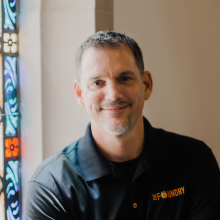
Jeff Fisher
Professor of theology at The Foundry, a ministry for church-centered, competency-based theological education across West Michigan that focuses on rigorous biblical interpretation, robust theology, and intentional spiritual formation to develop leaders, particularly in the Reformed tradition.
Jeff is ordained in the CRCNA, having served as a pastor at Unity CRC in Prinsburg, MN and pastoral intern at Bethel CRC in Tucson, Arizona. He and his family are currently members and involved in leadership at Madison Church: North in Grand Rapids, MI.
Rev. Dr. Fisher earned his Ph.D. in Theological Studies from Trinity Evangelical Divinity School, Th.M. from Calvin Theological Seminary, M.Div. from Trinity Evangelical Divinity School, and B.S. in Mathematics from the University of Northern Iowa. He served as Academic Dean and professor of theological studies at Kuyper College and previously taught theology at Trinity Christian College in Palos Heights, IL and Evangelical Presbyterian Theological Seminary (now Reformed and Presbyterian Seminary) in Kathmandu, Nepal. He is the author of A Christoscopic Reading of Scripture and editor of the Isaiah volumes in the Reformation Commentary on Scripture series (IVP Academic) along with many articles and chapters on Reformation exegesis and theology.
Posted in: Getting the Whole Picture, Part 1: Women and Ministry in 1 Timothy
Bev, thanks for all your work on this topic. I look forward to reading the rest of your posts as you work through the pieces you've "teased" in this introduction. I am eager to see what you've discovered from the research on αὐθεντεῖν, since as Aaron has observed it seems to be a key element of the "Whole Picture." In my (admittedly brief) research on the term, it seems that it was actually during the era of higher criticism that their techniques and methods led to the way the word is translated in most English versions today with the neutral "exercise/have authority."
So there's some irony in calling out the use of higher criticism techniques AND claiming some kind of "historic understanding of αὐθεντέω" when the "plain reading" of the current translation is relatively recent and based on the work of higher criticism in considering the 1st century social setting of Ephesus / Paul.
All the way back to the Vulgate, the "historical understanding of αὐθεντέω" had a negative force: non permitto neque dominari in virum. In the time of the Reformation, the primary English translations consistently translated this with a negative force:
The "neutral" kind of authority doesn't appear in translation until the mid-to-late 19th century with translations like the Webster Bible (1833) and the British Revised Version / English Revised Version (1881–1885). The Tyndale NT (1526) had "I suffre not a woman to teache nether to have auctoricie over a man," but it was quickly replaced and overshadowed by these other translations. But it was with the rise of higher criticism in the 19th century, that the translation shifted away from the usurping/domineering to the more neutral descriptive exercise/have authority.
I find that Abbott-Smith's first entry, (also Thayer's b, and Liddell-Scott) "to act on one’s own authority" has reasonable explanatory power for why Paul used this word here and only here rather than the more common ἐξουσιάζω that would express legitimate authority like that of elders, pastors, or government officials and have the broader application that so many read from (or into?) this verse.
And I'm sorry Bev, you were hit by that car in the crosswalk. May the Lord grant you healing and strength.
Posted in: Getting the Whole Picture, Part 1: Women and Ministry in 1 Timothy
Yes, I used TLG back in the late 90s when it was first moved from CD-ROMs to a more easily searchable database. It has significantly expanded since then. It's an incredible resource. I completely agree with trying to figure out Paul's use/sense of the word in Paul's time in the context of first century Ephesus.
My interest has been in translations and interpretations from the middle ages to post-Reformation. They obviously didn't have TLG and had inherited centuries of language and application. Erasmus is a major turning point in that whole picture and this is another one of those verses and words where he altered what had been received for generations from the Vulgate.
Notably Wycliffe 100+ years earlier translated it "not haue lordschip on the hosebonde" (a pretty significant departure from the Latin). My main point in the comment was to reinforce that there actually hasn't been a singular "historical understanding" of just this word, let alone the whole verse and the broader literary context.
Posted in: Share Your 3-Word Prayer for the Human Sexuality Conversation
Listen, love, lead
Posted in: Talking About Human Sexuality With Love
At some point in the discussion here, this great question got raised, "How can we have clear theological thinking AND deep Christ-like compassion simultaneously?" (especially since a lot of the 'conversation / discussion' feels like it is either-or).
For pastors and church leaders interested in digging deeper to address that question -- especially in light of whatever happens at Synod -- The Foundry (a ministry for strengthening church leaders) is running four Pastors Learning Cohorts entitled, "Clarity and Care." These learning communities will study, engage, work through, wrestle with, and deliberate on how to hold to a traditional/historic view on sexuality and marriage AND lovingly, thoughtfully, and charitably embrace our LGBTQIA+ brothers and sisters in Christ. We guarantee no easy answers. But we want to serve the church and church leaders by making space for these massively important discussions and decisions.
You can check out the description at https://network.crcna.org/leadership-development/pastoral-care-lgbt-people-your-church
Posted in: Human Sexuality Report: Ready to Rumble?
It is great to hear about those who have benefited from the Challenging Conversations toolkit. Thanks, Sean and PCR for providing these resources!
As churches "consider what their congregations should do next," especially in light of whatever happens at Synod, The Foundry (a training ministry in GR) is running four Pastors Learning Cohorts entitled, "Clarity and Care." These learning communities will study, engage, work through, wrestle with, and deliberate on how to hold to a traditional/historic view on sexuality and marriage AND lovingly, thoughtfully, and charitably embrace our LGBTQIA+ brothers and sisters in Christ. We guarantee no easy answers. But we want to serve the church and church leaders by making space for these massively important discussions and decisions.
You can check out the description at https://network.crcna.org/leadership-development/pastoral-care-lgbt-people-your-church
Posted in: The Abide Project
For pastors and church leaders interested in studying and working through the pastoral care implications post-Synod, The Foundry (a training ministry in GR) is running four Pastors Learning Cohorts entitled, "Clarity and Care." These will center around how to hold to a traditional/historic view on sexuality and marriage AND lovingly, thoughtfully, and charitably embrace our LGBTQIA+ brothers and sisters in Christ. We guarantee no easy answers. But we want to serve the church and church leaders by making space for these massively important discussions and decisions.
You can check out the description at https://network.crcna.org/leadership-development/pastoral-care-lgbt-people-your-church